Is Jollibee Halal? Menu & Ingredients Explained
One of the most commonly asked questions about Jollibee is: Is Jollibee Halal? For Muslim Filipinos, Muslim tourists visiting the Philippines, and Filipino communities abroad, this is an important question that deserves a clear, thorough answer. This guide covers everything you need to know about Jollibee’s halal status — in the Philippines, internationally, and what Muslim customers can safely order.
Is Jollibee Halal in the Philippines?
The short answer is: it depends on the branch. Jollibee Philippines does not operate as a fully halal-certified chain across all its branches. However, Jollibee has made significant efforts to accommodate Muslim customers by certifying select branches in areas with large Muslim populations — particularly in Mindanao and other regions with significant Muslim communities.
Jollibee branches in Muslim-majority areas of Mindanao — including Cotabato City, Marawi, Zamboanga, and other parts of the Bangsamoro Autonomous Region in Muslim Mindanao (BARMM) — are certified halal by recognized Islamic organizations in the Philippines. These branches follow strict halal food preparation standards, including the use of halal-slaughtered meat, separate cooking equipment, and halal-certified ingredients throughout the preparation process.
Outside of these specifically certified branches, Jollibee Philippines does not carry an official halal certification for its standard operations. This means that in Metro Manila and most other regions, Jollibee operates standard food preparation practices that may not meet halal requirements — including the use of pork-based products like the Jolly Hotdog and potential cross-contamination during food preparation.
Which Jollibee Branches Are Halal-Certified in the Philippines?
Jollibee has certified halal branches primarily in the following areas:
- Cotabato City — Multiple branches serving the large Muslim population of the BARMM capital
- Marawi City — Serving the predominantly Muslim population of Lanao del Sur
- Zamboanga City — Select branches certified for the significant Muslim community in the area
- General Santos City — Branches serving the diverse population of SOCCSKSARGEN
- Other Mindanao cities and municipalities — Additional branches in areas with significant Muslim populations
To confirm whether your nearest Jollibee branch is halal-certified, the most reliable approach is to contact the branch directly or check with the Islamic Da’wah Council of the Philippines (IDCP) — the primary halal certification body in the Philippines — for their current list of certified Jollibee locations. Jollibee’s official app and customer service hotline can also provide guidance on halal branch locations in your area.
Is Jollibee Halal Outside the Philippines?
Jollibee’s halal status varies significantly by country. In Muslim-majority countries and regions where Jollibee operates, the chain typically obtains local halal certification to serve the local population. Here’s a breakdown by key market:
- Saudi Arabia — All Jollibee branches in Saudi Arabia are fully halal-certified, as required by Saudi law for all food establishments operating in the Kingdom. Muslim customers can eat at any Jollibee branch in Saudi Arabia with full confidence.
- Qatar, UAE, Bahrain, Kuwait — Jollibee branches in Gulf Cooperation Council (GCC) countries are halal-certified in compliance with local Islamic authorities and food regulations. All menu items served in these markets are halal.
- Brunei — Brunei has strict halal requirements for all food establishments, and Jollibee branches there operate under the country’s halal certification framework.
- Malaysia — Select Jollibee branches in Malaysia are halal-certified by JAKIM (the Department of Islamic Development Malaysia). Check the JAKIM halal directory for the most current list of certified Malaysian Jollibee branches.
- Indonesia — Jollibee Indonesia operates with halal certification from MUI (Majelis Ulama Indonesia), the Indonesian Ulema Council. All branches in Indonesia serve halal food.
- United States, Canada, United Kingdom, Europe — Jollibee branches in Western countries are generally NOT halal-certified. The menu in these markets includes pork products and standard (non-halal) meat sourcing. Muslim customers in these countries should verify directly with their nearest branch before ordering.
- Singapore and Hong Kong — Jollibee branches in Singapore and Hong Kong are generally not fully halal-certified, though some individual branches may have specific halal certifications. Check with the branch directly for the most current information.
What Can Muslim Customers Order at Non-Halal Jollibee Branches?
For Muslim customers who find themselves at a non-halal-certified Jollibee branch — whether in Metro Manila or abroad — the situation requires careful consideration. Islamic scholars differ on the permissibility of eating at non-halal establishments, so individual Muslims should consult their own religious guidance on this matter.
That said, here is a factual overview of which Jollibee menu items contain pork and which do not, to help Muslim customers make informed decisions:
Jollibee Menu Items That Contain Pork
- Jolly Hotdog — The Jolly Hotdog sausage is pork-based. Both the Classic and Cheesy variants contain pork.
- Jolly Spaghetti — Contains sliced hotdog (pork-based) in the sauce. The ground meat in the sauce also contains pork.
- Shanghai (Lumpiang Shanghai) — The filling is primarily seasoned ground pork. Muslim customers should avoid this item at non-halal branches.
- Some breakfast items — Certain Jollibee breakfast items like longsilog may contain pork-based longganisa. Check the specific item ingredients with the branch.
Jollibee Menu Items That Do Not Contain Pork
The following items do not contain pork as an ingredient, though Muslim customers should note that at non-halal branches, cross-contamination during preparation is possible as the kitchen handles both pork and non-pork items:
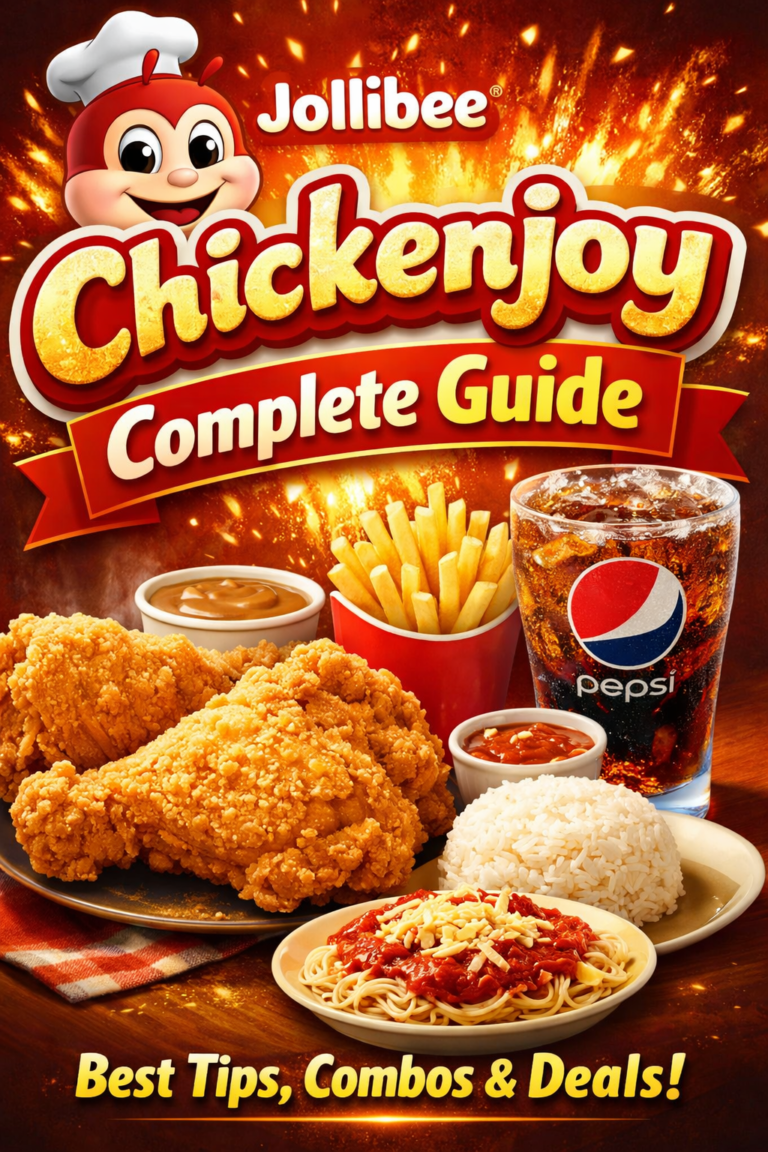
- Chickenjoy — The fried chicken itself does not contain pork ingredients. The chicken is marinated and fried separately from pork items.
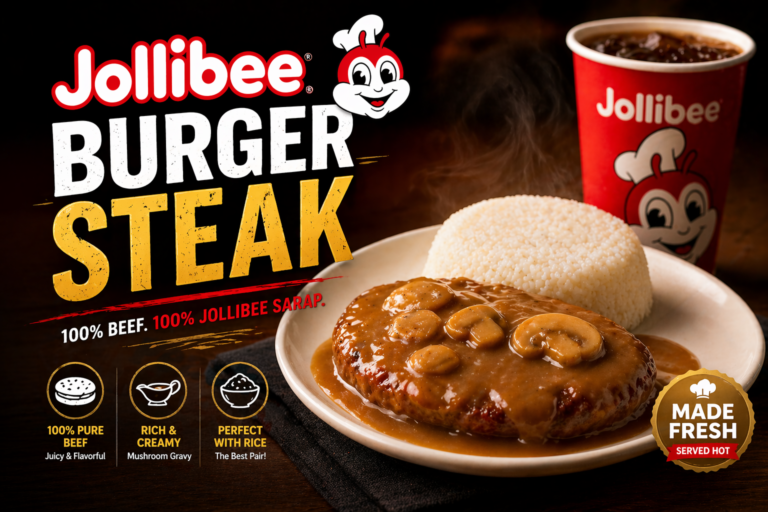
- Burger Steak — The beef patty and mushroom gravy do not contain pork ingredients.
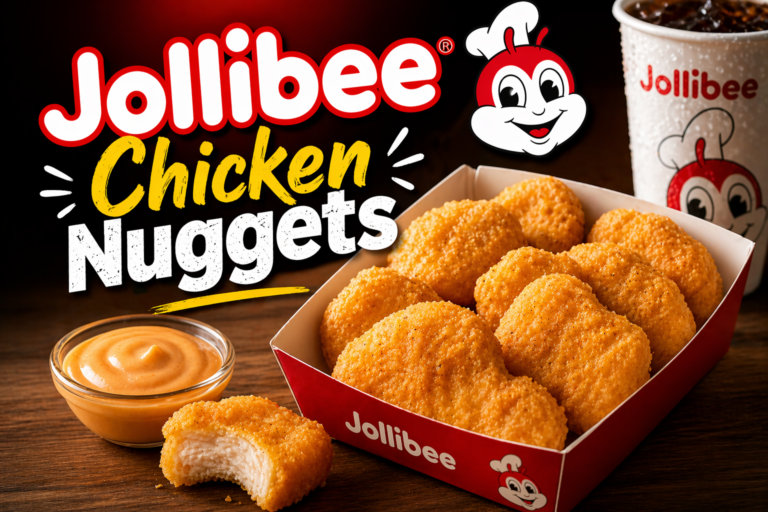
- Chicken Nuggets — Made from chicken with no pork ingredients.
- Chicken Sandwich — The chicken fillet and standard toppings do not contain pork.
- Palabok Fiesta — The palabok sauce is shrimp-based and does not contain pork. However, it does contain shellfish, which is permissible for most Muslim schools of thought but should be noted for those following specific dietary guidance.
- Regular Fries and Jolly Crispy Fries — Potato fries with no pork ingredients, though cooking oil should be verified for halal compliance at non-certified branches.
- Peach Mango Pie and other pies — The fruit pies do not contain pork ingredients.
- Beverages — All standard Jollibee drinks (sodas, juices, water, coffee) contain no pork ingredients.
Understanding Cross-Contamination at Non-Halal Branches
Even for menu items that do not contain pork as an ingredient, Muslim customers at non-halal-certified Jollibee branches should be aware of potential cross-contamination. In a standard Jollibee kitchen, items like Jolly Hotdog (pork) and Chickenjoy (chicken) may be prepared in the same kitchen space, potentially sharing fryers, utensils, or cooking surfaces.
At halal-certified Jollibee branches, strict separation protocols prevent this cross-contamination. Pork products are either completely removed from the menu or prepared with entirely separate equipment and utensils. The halal certification process verifies these protocols are followed consistently.
For Muslim customers with strict halal requirements, dining only at halal-certified branches is the safest and most compliant approach. For those with more flexible interpretations, consuming pork-free items at non-certified branches may be acceptable — but this is ultimately a personal religious decision.
Jollibee’s Halal Menu at Certified Branches
At Jollibee branches that are fully halal-certified, the menu is modified to remove all pork-based items and ensure all remaining items meet halal standards. The typical halal-certified Jollibee menu includes:
- Chickenjoy — Halal-slaughtered chicken, prepared with halal-certified ingredients and separate halal cooking equipment
- Chicken Nuggets — Halal chicken nuggets with banana ketchup
- Chicken Sandwich — Halal chicken fillet in bun
- Burger Steak — Halal beef patty with mushroom gravy and rice
- Yumburger — Halal beef burger
- Fries and Sides — Cooked in halal-certified cooking oil with no cross-contamination
- Peach Mango Pie and desserts — Halal-compliant ingredients
Note that pork-based items like the Jolly Hotdog, Jolly Spaghetti (with pork hotdog), and Shanghai are typically removed from the menu at halal-certified branches, or replaced with halal-compliant alternatives using beef or chicken sausage.
Tips for Muslim Customers Visiting Jollibee
- Always verify halal status before visiting — Call your nearest branch or check with the local Islamic certification authority to confirm halal status. Don’t assume — always ask directly.
- Look for the halal certification display — Certified branches typically display their halal certificate prominently near the counter or entrance. If you don’t see one displayed, ask the staff directly.
- In Muslim-majority countries, all branches are typically halal — In Saudi Arabia, Qatar, UAE, Indonesia, and Brunei, you can eat at any Jollibee with confidence that halal standards are met.
- Use the Jollibee app for branch information — The Jollibee app sometimes indicates branch-specific information. For halal branches, this may be noted in branch details.
- When in doubt, stick to clearly pork-free items — Chickenjoy, Chicken Nuggets, Burger Steak, Chicken Sandwich, fries, and beverages are all pork-free items that can be considered if you’re at a non-certified branch and need to make a reasonable choice.
Frequently Asked Questions
Q: Is Chickenjoy halal in the Philippines?
A: At non-certified branches, Chickenjoy is made from chicken with no pork ingredients, but is not halal-certified — meaning the slaughter method and preparation environment may not meet halal standards. At halal-certified Jollibee branches (primarily in Mindanao Muslim-majority areas), Chickenjoy is fully halal-certified with halal-slaughtered chicken and separate preparation protocols.
Q: Is Jollibee in Saudi Arabia halal?
A: Yes! All Jollibee branches in Saudi Arabia are fully halal-certified as required by Saudi law. Every menu item served at Jollibee Saudi Arabia meets halal standards. The same applies to other GCC countries including Qatar, UAE, Bahrain, and Kuwait.
Q: Does Jollibee have halal branches in Metro Manila?
A: As of 2026, Jollibee’s halal-certified branches in the Philippines are concentrated in Mindanao Muslim-majority areas. Metro Manila branches are not generally halal-certified. For the most current information, contact Jollibee Philippines customer service or the Islamic Da’wah Council of the Philippines (IDCP).
Q: Is the Jolly Spaghetti halal?
A: At standard (non-halal-certified) Jollibee branches, the Jolly Spaghetti contains pork-based hotdog slices and pork in the ground meat sauce — it is not halal. At halal-certified branches, the spaghetti may be modified to use halal beef or chicken sausage instead, making it halal-compliant.
Q: How can I find the nearest halal Jollibee branch?
A: Contact Jollibee Philippines customer service via the official app, website, or call the hotline. You can also check with the Islamic Da’wah Council of the Philippines (IDCP) for their current list of halal-certified Jollibee locations. For international branches, check the relevant national Islamic certification authority in your country.