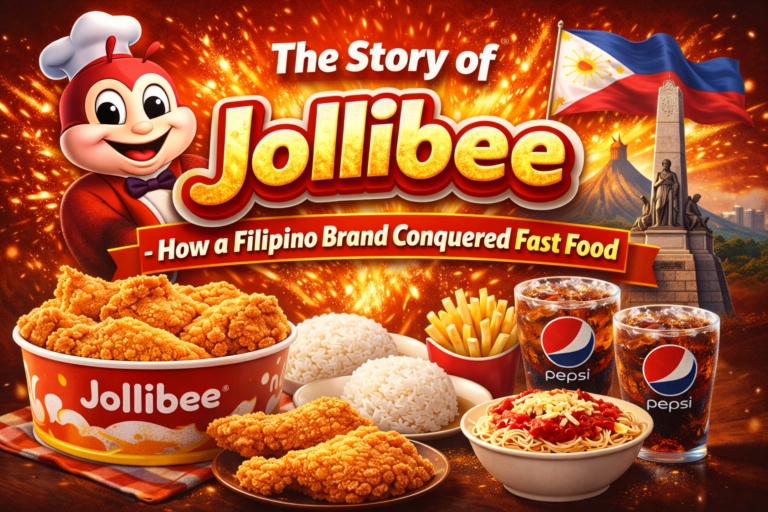
The Story Behind the Smile: How a Simple Dream Became Jollibee
You have probably seen those cheerful red and yellow stores, maybe even tasted that perfectly sweet spaghetti that somehow just hits different. But have you ever stopped to think about the person who dreamed it all up? Jollibee is not just another burger joint. For millions of Filipinos — and for a growing number of people around the world — it represents home. It is childhood birthdays, Sunday family lunches, and that familiar feeling of comfort no matter where you are. This is the story of how a simple ice cream parlor became the most beloved fast food brand in the Philippines.
The Humble Beginning
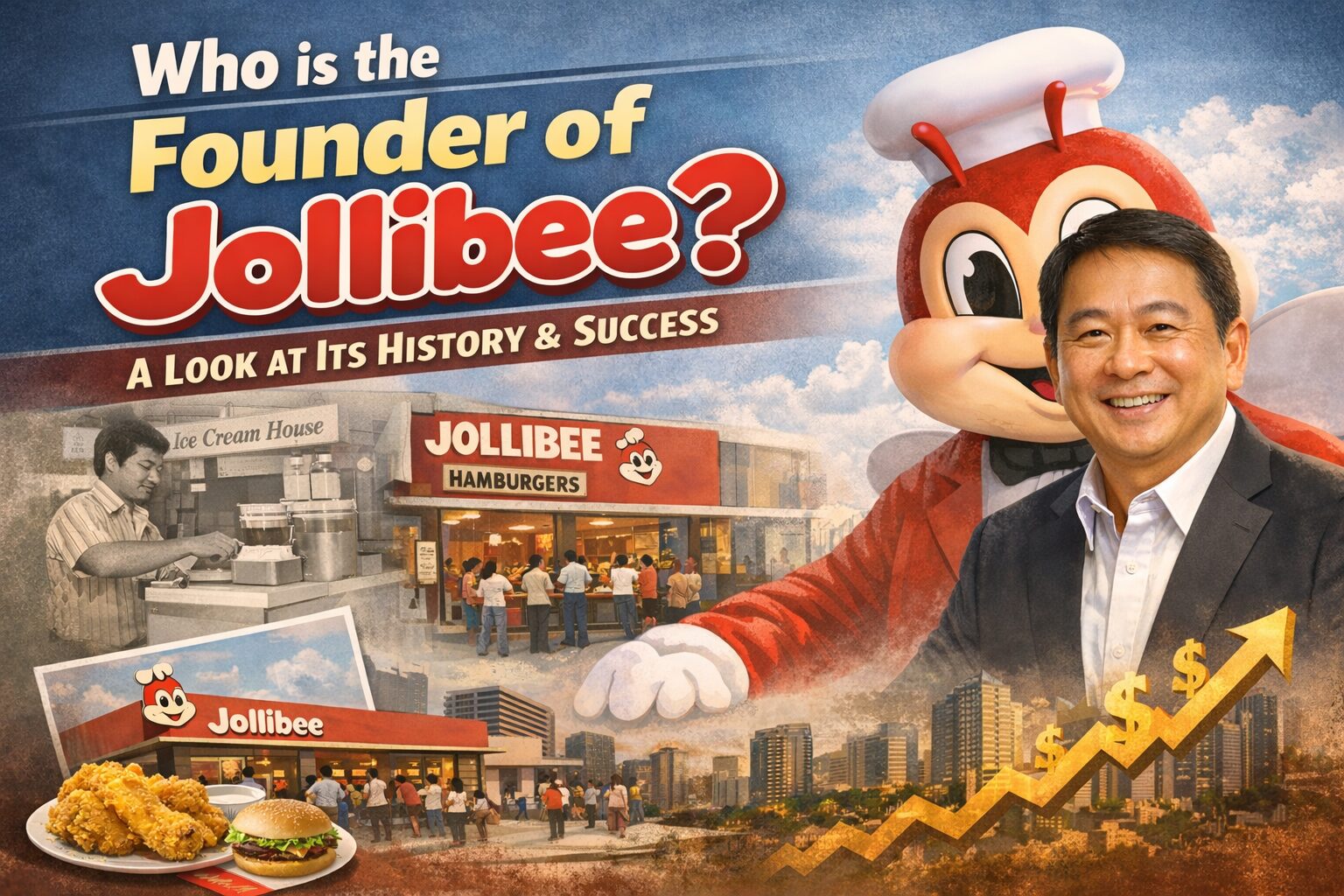
The story begins in 1975 in Cubao, Quezon City, where a Chinese-Filipino entrepreneur named Tony Tan Caktiong opened a small ice cream parlor. He called it Magnolia Ice Cream House, selling two brands of ice cream to neighborhood customers. Business was steady, but Tony noticed something interesting — his customers kept asking for hot meals along with their ice cream.
Rather than ignoring this demand, Tony made a pivotal decision. He started adding burgers, fried chicken, and other hot food items to the menu. The response was overwhelming. Customers loved the food even more than the ice cream. By 1978, Tony had made the bold choice to completely transform his ice cream parlor into a full fast food restaurant. He named it Jollibee, inspired by the image of a hardworking, cheerful bee — a symbol of Filipino resilience and optimism.
Taking on McDonald’s
When McDonald’s entered the Philippine market in 1981, everyone expected the American giant to dominate. They had global brand recognition, massive budgets, and decades of fast food expertise. Most local chains across Asia quickly lost market share to McDonald’s during this period.
But Jollibee did something different. Instead of trying to copy the American fast food formula, Tony Tan Caktiong doubled down on Filipino flavors. He made the spaghetti sweeter because that is how Filipinos like it. He ensured the fried chicken was juicier and served with rice and gravy because Filipinos eat rice with every meal. He developed Palabok and Burger Steak — dishes that had no equivalent on any American fast food menu.
This strategy worked brilliantly. By the mid-1980s, Jollibee had overtaken McDonald’s Philippines in market share — a feat that almost no local fast food chain has achieved anywhere in the world. To this day, Jollibee remains the number one fast food brand in the Philippines, with McDonald’s as a distant second in terms of cultural significance.
Building a Filipino Empire
After securing dominance in the Philippines, Jollibee Food Corporation expanded aggressively. The company did not just grow Jollibee — it acquired other major brands to build a food empire. Today, Jollibee Food Corporation owns Greenwich Pizza, Chowking, Red Ribbon Bakeshop, Mang Inasal, and Burger King Philippines. Internationally, the corporation also owns The Coffee Bean and Tea Leaf and Smashburger in the United States.
This strategy of acquiring established brands allowed Jollibee Food Corporation to cover virtually every segment of the Philippine food market — from pizza and Chinese food to Filipino grilled chicken and premium bakery products. By 2026, the corporation operates over 6,000 stores worldwide across all its brands.
Going Global — Jollibee Around the World
Jollibee’s international expansion began in the 1980s targeting overseas Filipino communities in the Middle East and Southeast Asia. The strategy was simple — wherever Filipino workers went, Jollibee would follow, bringing the taste of home to homesick overseas Filipinos.
But something unexpected happened. Non-Filipino customers started discovering Jollibee and falling in love with the food. In the United States, Canada, the UK, Italy, Spain, and other Western countries, Jollibee stores regularly attract massive opening-day lines — sometimes with people camping out overnight. The combination of Chickenjoy’s incredible crunch, the uniqueness of sweet spaghetti, and the warmth of the brand’s family-oriented identity resonated across cultures.
As of 2026, Jollibee operates over 300 stores outside the Philippines across North America, the Middle East, Europe, and Asia-Pacific. The brand has announced plans to reach 500 international stores by 2028, with major expansion focused on the United States and the United Kingdom.
The Secret Behind Jollibee’s Success
What makes Jollibee different from every other fast food chain is its refusal to be a copy of Western fast food. From the very beginning, Tony Tan Caktiong understood that Filipino consumers wanted food that reflected their own tastes, not imported American flavors. Every item on the Jollibee menu was developed with the Filipino palate in mind.
Beyond the food, Jollibee’s success comes from its emotional connection with Filipino culture. The brand positions itself as a symbol of family togetherness, celebration, and national pride. Jollibee birthday parties are a rite of passage for Filipino children. The brand’s heartwarming advertisements regularly go viral, telling stories about love, family reunion, and the Filipino spirit of joy and resilience.
This combination of authentic Filipino food and deep emotional branding has created a loyalty that no competitor has been able to replicate. Jollibee is not just a restaurant — it is a part of Filipino identity.
Tony Tan Caktiong — The Man Behind the Bee
Tony Tan Caktiong, born in 1953 in Fujian, China, immigrated to the Philippines as a child with his family. He studied chemical engineering at the University of Santo Tomas before entering the food business. His journey from a modest ice cream shop owner to the chairman of one of Asia’s largest food corporations is one of the most inspiring business stories in Philippine history.
Under his leadership, Jollibee Food Corporation grew from a single store to a publicly traded multinational company with a market capitalization of billions of pesos. Tony is consistently ranked among the richest people in the Philippines and has received numerous awards for entrepreneurship and business leadership across Asia.
The Jollibee Mascot — More Than Just a Bee
The Jollibee mascot — a cheerful, dancing red bee with a chef’s hat — is one of the most recognizable brand characters in Southeast Asia. For Filipino children, encountering the Jollibee mascot at a birthday party or in-store appearance is a genuinely exciting moment, comparable to meeting a favorite cartoon character at a theme park. The mascot dances, waves, poses for photos, and interacts with kids in a way that creates lasting positive memories associated with the brand.
The design of the Jollibee bee was intentional from the start. Tony Tan Caktiong chose a bee as the brand symbol because bees represent hard work, community, and sweetness — values that aligned with both Filipino culture and the brand’s mission to provide affordable, joyful meals for families. The red and yellow color scheme was chosen for its warmth, energy, and visibility, and it has remained virtually unchanged for over four decades.
Over the years, the Jollibee mascot has evolved from a simple in-store costume character to a full-fledged cultural icon. The mascot appears in television commercials, social media content, merchandise, and even collaborations with fashion brands and artists. Jollibee mascot merchandise — plush toys, clothing, accessories, and collectibles — generates significant revenue and serves as a form of cultural expression for Filipino pride worldwide. When overseas Filipinos display Jollibee merchandise, it is often as much a statement of identity as it is brand loyalty.
Jollibee’s Impact on Filipino Business
Beyond its cultural significance, Jollibee’s success has had a profound impact on Philippine business and entrepreneurship. Tony Tan Caktiong’s story — from immigrant ice cream shop owner to billionaire chairman of a multinational food corporation — is taught in Philippine business schools as a case study in competitive strategy, brand building, and local market adaptation.
Jollibee Food Corporation is one of the largest employers in the Philippines, providing jobs to tens of thousands of workers across its restaurant network, corporate offices, and supply chain operations. The company’s success has also inspired a generation of Filipino entrepreneurs who saw that a local brand could not only survive against global competition but actually dominate it. Mang Inasal, Greenwich Pizza, and dozens of other Filipino food brands have followed the path that Jollibee pioneered — proving that Filipino consumers will choose local brands when those brands deliver quality, value, and cultural relevance.
Frequently Asked Questions
When was Jollibee founded?
Jollibee was founded in 1978 when Tony Tan Caktiong converted his Magnolia Ice Cream House in Cubao, Quezon City into a fast food restaurant. The original ice cream parlor had been operating since 1975.
How did Jollibee beat McDonald’s in the Philippines?
Jollibee beat McDonald’s by focusing on Filipino flavors instead of copying the American fast food formula. Sweet spaghetti, Chickenjoy with rice and gravy, and Palabok gave Filipino consumers food that matched their taste preferences, while McDonald’s offered standard Western-style items that did not resonate as deeply.
Who owns Jollibee?
Jollibee is owned by Jollibee Foods Corporation, a publicly traded company on the Philippine Stock Exchange. The Tan family, led by founder Tony Tan Caktiong, remains the largest shareholder and continues to guide the company’s strategic direction.
How many Jollibee stores are there worldwide?
As of 2026, there are over 1,800 Jollibee stores worldwide — approximately 1,500 in the Philippines and over 300 in international markets including the United States, Canada, United Kingdom, Saudi Arabia, UAE, Singapore, Vietnam, and several European countries.