Jollibee Menu Calories & Nutrition Facts (Health Guide)
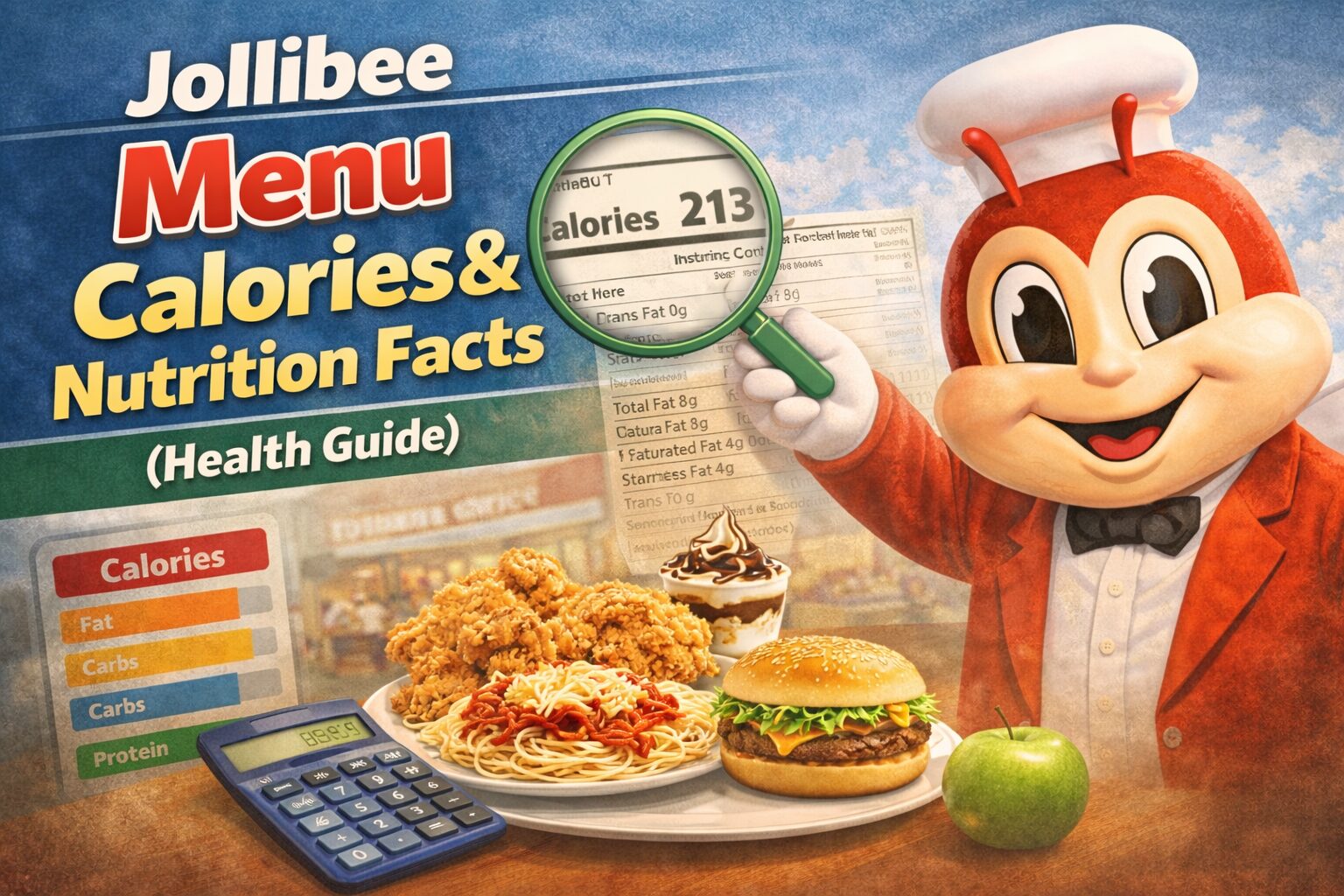
When you walk into Jollibee craving that crispy Chickenjoy or sweet spaghetti, calories are probably the last thing on your mind. But understanding the nutritional content of your favorite Jollibee meals can help you make smarter choices without giving up the foods you love. In 2026, more Filipinos are paying attention to what they eat — and Jollibee’s menu has more variety than most people realize when it comes to lighter options.
This complete guide covers the full calorie and nutrition facts for every major Jollibee menu category — from Chickenjoy and Burger Steak to Jolly Spaghetti, Nuggets, Fries, Breakfast items, and Desserts. Whether you’re counting calories, tracking macros, or simply trying to make a healthier fast food choice, this guide has everything you need.
Jollibee Calories — Complete Menu Overview 2026
Chickenjoy Calories
| Menu Item | Calories | Protein | Fat | Carbs |
| 1 pc Chickenjoy Solo (with skin) | ~320 kcal | ~22g | ~20g | ~14g |
| 1 pc Chickenjoy Solo (no skin) | ~240 kcal | ~24g | ~11g | ~8g |
| 1 pc Chickenjoy with Rice | ~520 kcal | ~28g | ~20g | ~58g |
| 2 pc Chickenjoy Solo | ~640 kcal | ~44g | ~40g | ~28g |
| 2 pc Chickenjoy with Rice & Drink | ~800 kcal | ~48g | ~40g | ~90g |
Health tip: Removing the Chickenjoy skin saves approximately 80–100 calories and significantly reduces fat content. The skinless chicken underneath is a lean protein source — one of the best calorie-to-protein ratios on the entire Jollibee menu. For more skinless and low-calorie options, see the Jollibee Under 650 Calories Menu.
Burger Steak Calories
| Menu Item | Calories | Protein | Fat | Sodium |
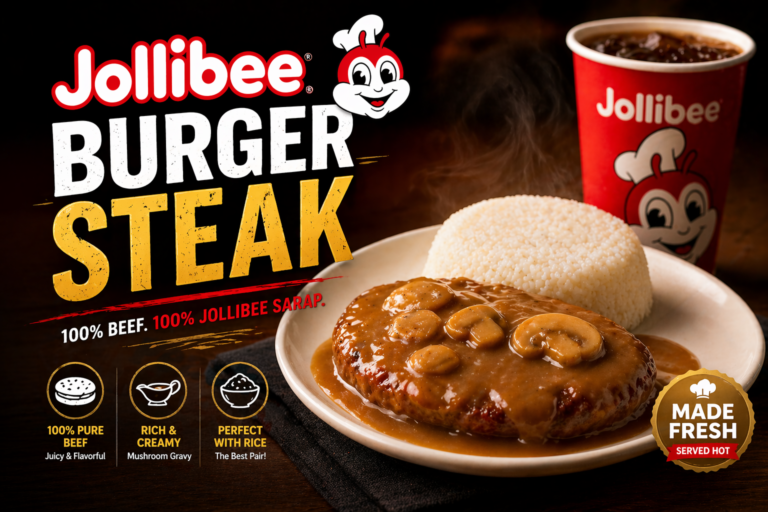
| 1 pc Burger Steak Solo (with rice) | ~520 kcal | ~20g | ~18g | ~820mg |
| 1 pc Burger Steak with Drink | ~590 kcal | ~20g | ~18g | ~860mg |
| 2 pc Burger Steak Solo | ~720 kcal | ~36g | ~32g | ~1,200mg |
The Burger Steak is one of the more calorie-dense options due to the combination of beef patty, mushroom gravy, and steamed rice. The sodium content is notably high — worth noting for those managing blood pressure or sodium intake. If you’re watching sodium, skip the extra gravy and drink water instead of soda.
Jolly Spaghetti Calories
| Menu Item | Calories | Protein | Fat | Carbs |
| Jolly Spaghetti Solo | ~430 kcal | ~13g | ~14g | ~60g |
| Jolly Spaghetti with Drink | ~500 kcal | ~13g | ~14g | ~78g |
The Jolly Spaghetti is moderate in calories for a pasta dish. The sweetened sauce and processed cheese topping add carbohydrates and fat, but the overall calorie count remains manageable at 430 kcal solo. Protein content is relatively low for the calorie count — not the best option if protein is your priority, but great as a comfort food side paired with Chickenjoy.
Yumburger and Burger Calories
| Menu Item | Calories | Protein | Fat | Carbs |
| Yumburger Solo | ~260 kcal | ~12g | ~10g | ~32g |
| Cheesy Yumburger Solo | ~300 kcal | ~14g | ~13g | ~32g |
| Yumburger with Fries and Drink | ~620 kcal | ~16g | ~22g | ~88g |
The Yumburger Solo at just 260 calories is one of the lowest-calorie complete food items at Jollibee. For a quick, light meal that won’t blow your daily calorie budget, a Yumburger Solo with water is hard to beat — approximately 260 calories for a complete burger experience. See the full Jollibee Burger Menu for all burger options and prices.
Chicken Nuggets Calories
| Menu Item | Calories | Protein | Fat | Sodium |
| 6 pc Chicken Nuggets Solo | ~300 kcal | ~15g | ~18g | ~490mg |
| 6 pc Nuggets with Drink | ~370 kcal | ~15g | ~18g | ~530mg |
| 6 pc Nuggets with Fries and Drink | ~590 kcal | ~18g | ~27g | ~820mg |
At ~50 calories per nugget, Jollibee Chicken Nuggets are one of the most calorie-efficient snack options at any Philippine fast food chain. The protein-to-calorie ratio is good for a fried item, making them a reasonable choice for those tracking macros. Sodium is moderate — manageable for most healthy adults.
Fries and Sides Calories
| Menu Item | Calories | Fat | Sodium |
| Regular Fries | ~290 kcal | ~14g | ~380mg |
| Large Fries | ~400 kcal | ~19g | ~520mg |
| Mashed Potato with Gravy | ~180 kcal | ~6g | ~480mg |
| Steamed Rice | ~180 kcal | ~0g | ~5mg |
| Corn on the Cob | ~90 kcal | ~1g | ~15mg |
Among the sides, Corn on the Cob at just 90 calories is the lightest option by far — a smart substitution if you want something on the side without adding too many calories. Mashed Potato at 180 calories is also reasonable. Steamed rice at 180 calories is very low in sodium and fat, making it a better side than fries for those watching fat intake. See all sides and prices at the Jollibee Fries and Sides Menu.
Desserts and Beverages Calories
| Menu Item | Calories |
| Peach Mango Pie | ~240 kcal |
| Hot Fudge Sundae | ~330 kcal |
| Regular Coke / Sprite / Royal | ~140 kcal |
| Large Coke / Sprite / Royal | ~210 kcal |
| Bottled Water | 0 kcal |
| Brewed Coffee (black) | ~5 kcal |
| Hot Chocolate | ~120 kcal |
Drinks are one of the biggest hidden calorie sources at fast food restaurants. A regular Coke at Jollibee adds 140 calories with zero nutritional value — switching to water saves those calories instantly. If you want something sweet, the Peach Mango Pie at 240 calories is a reasonable treat, especially if you’ve kept the rest of your meal light. Check all dessert options at the Jollibee Desserts Menu.
Breakfast Menu Calories
| Menu Item | Calories |
| Chickenjoy Breakfast Silog (rice + egg) | ~620 kcal |
| Longsilog (Longganisa + Sinangag + Itlog) | ~580 kcal |
| Corned Beef Silog | ~540 kcal |
| Hotdog Breakfast Meal | ~490 kcal |
| Pancakes (2 pc) | ~350 kcal |
| Oatmeal | ~180 kcal |
Jollibee’s Breakfast Menu offers some surprisingly light options. Oatmeal at just 180 calories is the lightest breakfast item available. Pancakes at 350 calories are also a moderate option. Silog meals (rice + egg + protein) range from 490–620 calories — filling and energy-giving for a long day but calorie-dense. Skip the extra rice serving to keep breakfast under 500 calories.
Highest and Lowest Calorie Items at Jollibee
Lowest Calorie Options (Under 300 kcal)
- Corn on the Cob — ~90 kcal. The lightest item on the entire Jollibee menu. Zero fat, almost no sodium, pure whole food.
- Oatmeal (Breakfast) — ~180 kcal. Great for breakfast. Low fat, decent fiber, keeps you full longer than most fast food options.
- Steamed Rice — ~180 kcal. Clean, low-fat, low-sodium carb source. Best side for calorie-conscious diners.
- 1 pc Chickenjoy No Skin — ~240 kcal. Excellent protein-to-calorie ratio. One of the best low-calorie protein options at any Philippine fast food chain.
- Yumburger Solo — ~260 kcal. Complete burger under 270 calories. Remarkable for a fast food burger.
- 6 pc Chicken Nuggets — ~300 kcal. ~50 calories per nugget with 15g protein. Smart snack choice.
Highest Calorie Items (Over 700 kcal)
- 2 pc Chickenjoy with Rice & Drink — ~800 kcal. Good for heavy eaters or post-workout meals but not a light option.
- 2 pc Burger Steak Solo — ~720 kcal. High in sodium as well as calories — best split between two people.
- Yumburger with Fries and Drink — ~620 kcal. The full combo adds significantly to the Yumburger’s solo calorie count.
- Chickenjoy Breakfast Silog — ~620 kcal. Filling and energy-dense — fine for an active day but heavy for a sedentary one.
How to Build a Low-Calorie Jollibee Meal
Eating within a reasonable calorie budget at Jollibee is entirely achievable with smart choices. Here are three complete meal combinations under 500 calories:
- Option 1 — The Light Protein Meal (~420 kcal, ₱96): 1 pc Chickenjoy No Skin (~240 kcal) + Steamed Rice (~180 kcal) + Water (0 kcal). High protein, low fat, zero-calorie drink.
- Option 2 — The Budget Snack (~300 kcal, ₱110): 6 pc Chicken Nuggets Solo (~300 kcal) + Water (0 kcal). Quick, filling snack under 300 calories for ₱110.
- Option 3 — The Comfort Meal (~430 kcal, ₱60): Jolly Spaghetti Solo (~430 kcal) + Water (0 kcal). Classic Filipino comfort food under 450 calories at the lowest price on the menu.
- Option 4 — The Filling Burger (~260 kcal, ₱60): Yumburger Solo (~260 kcal) + Water (0 kcal). The most calorie-efficient complete burger meal at any Philippine fast food chain.
For a more comprehensive guide to low-calorie ordering at Jollibee, see the dedicated Jollibee Under 650 Calories Menu guide.
Sodium Content — What to Watch Out For
Sodium is often overlooked when people count fast food calories, but it’s one of the most important nutritional factors to monitor — especially for those with hypertension, kidney concerns, or cardiovascular health considerations. At Jollibee, sodium tends to be highest in:
- Burger Steak — The mushroom gravy is the main sodium source. A 2-pc Burger Steak can exceed 1,200mg sodium — more than half the recommended daily limit of 2,300mg in a single meal.
- Jolly Hotdog — Processed hotdog sausages are inherently high in sodium. The Jolly Hotdog is one of the saltiest items on the menu. Check the Jollibee Hotdog Menu for full details.
- Palabok Fiesta — The shrimp-based palabok sauce is flavorful but sodium-dense. One serving can contain 800–1,000mg sodium. See the Jollibee Palabok Menu for pricing and details.
- Combo meals with fries — Adding fries and a soda to any meal significantly increases sodium. Choosing water and skipping fries can reduce sodium by 400–600mg per meal.
Practical Nutrition Tips for Jollibee in 2026
- Always choose water over soda — Eliminating a regular Coke saves 140 calories and significant sugar with zero sacrifice in meal satisfaction.
- Remove Chickenjoy skin — Saves 80–100 calories and roughly 9g of fat per piece. The chicken underneath is genuinely lean and high in protein.
- Rice over fries as a side — Steamed rice (~180 kcal, 0g fat) is substantially lighter than regular fries (~290 kcal, 14g fat). You get a more filling side with less fat and fewer calories.
- Skip extra gravy — Jollibee’s mushroom gravy is delicious but adds sodium and calories. Use a moderate amount rather than pouring it over everything.
- Avoid double-carb combos — Ordering both rice and spaghetti together gives you two carb-heavy sides in one meal. Pick one.
- Check the Jollibee app for nutrition info — The official Jollibee app provides calorie counts for most menu items so you can plan your order before you arrive.
- Corn on the Cob as a side — At ~90 calories, it’s the lightest side option available. Ask for it at the counter — it’s available at most branches.
Is Jollibee a Healthy Fast Food Choice?
Like all fast food, Jollibee is best enjoyed in moderation as part of a balanced diet. It is not a health food restaurant — but it does offer more low-calorie options than many people realize. With smart ordering, it’s entirely possible to enjoy a satisfying Jollibee meal for under 500 calories.
The key insight is this: Jollibee’s base proteins — Chickenjoy (skinless), Chicken Nuggets, Yumburger, Burger Steak — are all reasonable protein sources at moderate calorie counts. The calories spiral when you add full combo drinks, extra rice, fries, gravy upgrades, and desserts on top of an already complete meal.
For those who eat at Jollibee regularly, applying even two or three of the tips above — choosing water, removing chicken skin, swapping fries for rice — can meaningfully reduce weekly calorie intake without reducing satisfaction or enjoyment of the meal. For budget-conscious diners who also want to keep calories in check, see the Best Jollibee Meals Under ₱150 guide.
Frequently Asked Questions
Q: Does Jollibee publish official nutrition information?
A: Yes. Jollibee provides calorie and nutrition data through their official app and website. The data includes calories, protein, fat, carbohydrates, and sodium for most standard menu items.
Q: Which Jollibee item has the most calories?
A: Bucket meals and large family combos have the highest total calories. Among individual items, the 2-pc Chickenjoy with Rice and Drink (~800 kcal) and 2-pc Burger Steak (~720 kcal) are among the highest in calories per serving.
Q: Which Jollibee item is lowest in calories?
A: Corn on the Cob at ~90 kcal is the lightest item. Among main dishes, 1-pc Chickenjoy without skin (~240 kcal) and Yumburger Solo (~260 kcal) are the lowest-calorie options for a complete protein-based meal.
Q: Can I lose weight while eating at Jollibee?
A: Weight management depends on total daily calorie intake, not individual restaurants. Eating at Jollibee with smart choices — water instead of soda, skinless Chickenjoy, rice instead of fries — can absolutely fit into a calorie-controlled diet.
Q: Is Jolly Spaghetti high in calories?
A: At ~430 kcal solo, Jolly Spaghetti is moderate in calories for a pasta dish. The main concern is carbohydrate and sugar content from the sweet sauce. As part of a combo with Chickenjoy, the total meal can reach 750–850 kcal depending on extras.
Q: How do Jollibee calories compare to McDonald’s Philippines?
A: Both chains have similar calorie ranges for comparable items. Jollibee’s Yumburger (~260 kcal) is slightly lower in calories than McDonald’s Hamburger (~290 kcal). Chickenjoy vs McChicken calories are comparable. Both chains have high-calorie combo meals that can exceed 800–1,000 kcal when fully loaded.