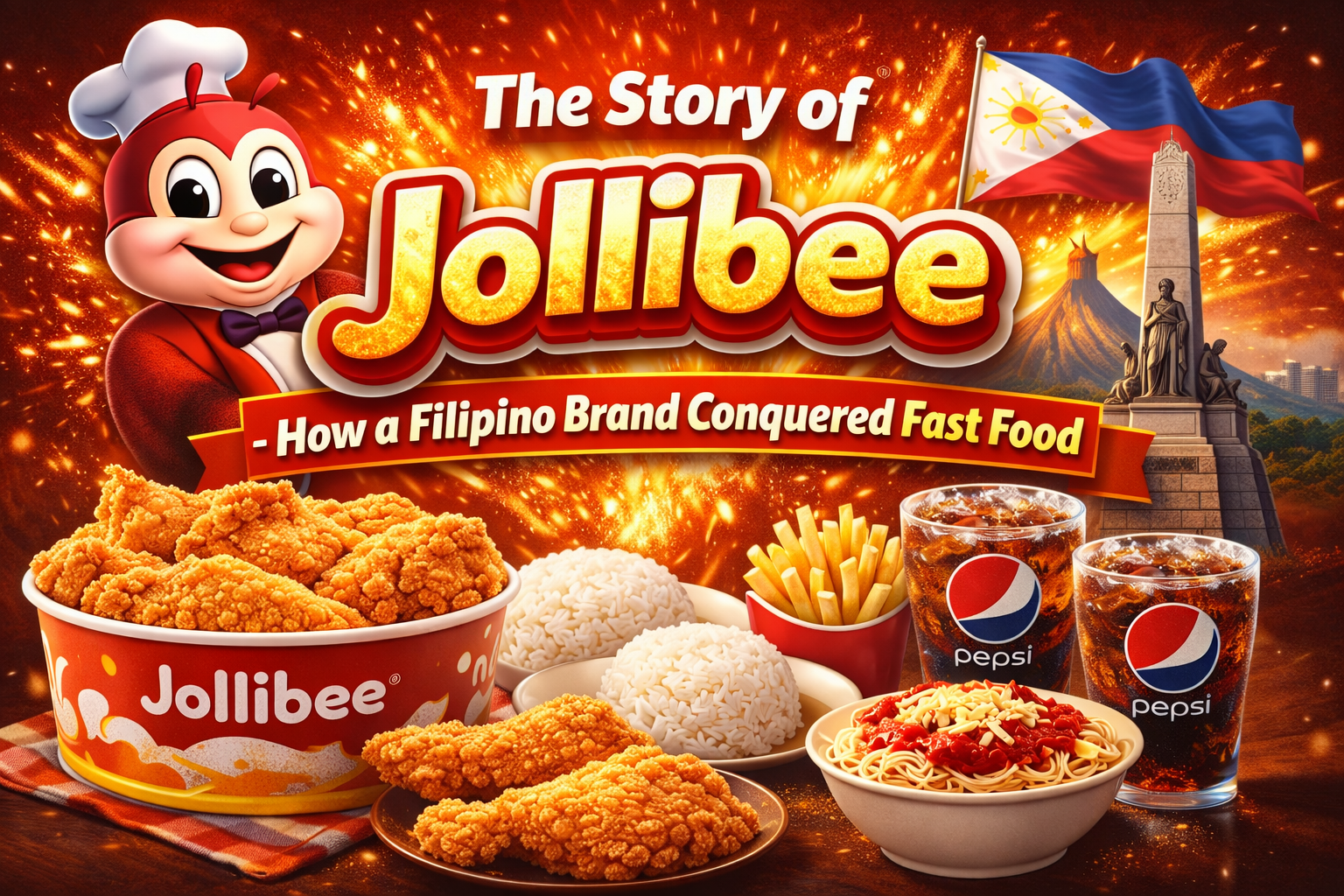
The Story of Jollibee – How a Filipino Brand Conquered Fast Food
Jollibee is not just the largest fast food chain in the Philippines — it is a national symbol. For millions of Filipinos, Jollibee represents childhood birthday parties, weekend family lunches, overseas longing for home, and the unmistakable pride of having a homegrown brand that beat McDonald’s in its own game. But how did a tiny ice cream parlor in Quezon City become a multinational food corporation with thousands of stores across the globe? This is the complete story of Jollibee — from its humble beginnings in 1975 to its status as one of Asia’s most powerful food brands in 2026.
The Ice Cream Parlor That Changed Everything (1975-1978)
The Jollibee story begins with Tony Tan Caktiong, a Chinese-Filipino entrepreneur born in 1953 in Fujian, China. Tony’s family immigrated to the Philippines when he was a child, and he grew up in Manila before studying chemical engineering at the University of Santo Tomas. In 1975, Tony and his family opened a small ice cream parlor in Cubao, Quezon City, selling Magnolia brand ice cream to local customers.
Business was decent, but Tony noticed something that would change everything — his customers kept asking for hot food alongside their ice cream. Rather than dismissing this demand, Tony started adding simple hot meals to the menu: burgers, fried chicken, and rice dishes. The response was immediate and overwhelming. Customers loved the food so much that it quickly outsold the ice cream. By 1978, Tony made the pivotal decision to transform the ice cream parlor into a full fast food restaurant. He named it Jollibee — inspired by the hardworking, cheerful bee, a symbol of the Filipino values of industry, optimism, and joy.
The David vs Goliath Moment (1981-1990)
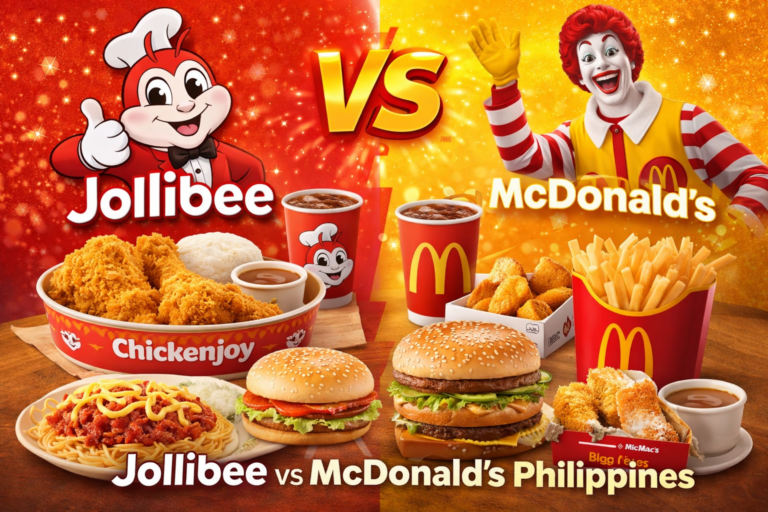
When McDonald’s entered the Philippines in 1981, industry analysts predicted the end of local fast food chains. Across Asia, McDonald’s had systematically dominated every market it entered. They had global brand power, billions in marketing budget, standardized operations refined over decades, and a product that consumers worldwide recognized. Every Filipino food entrepreneur expected McDonald’s to crush the competition.
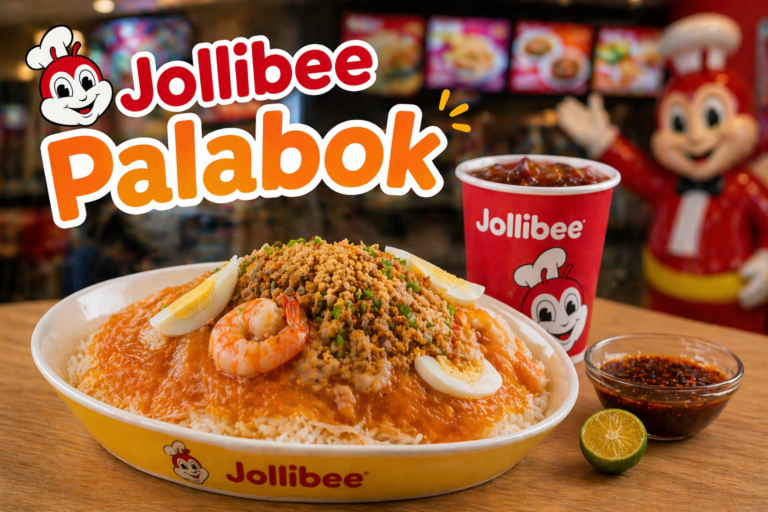
Tony Tan Caktiong saw it differently. Instead of trying to imitate McDonald’s — which would have been a losing strategy against a better-funded competitor — he doubled down on what made Jollibee uniquely Filipino. He made the spaghetti sweeter because Filipinos prefer sweet flavors. He ensured every Chickenjoy was served with rice and rich gravy because Filipinos eat rice with every meal. He created Palabok, Burger Steak, and other dishes that had zero equivalents on any American fast food menu.
This strategy worked spectacularly. By the mid-1980s, Jollibee had overtaken McDonald’s Philippines in market share — a feat that virtually no local fast food brand has achieved anywhere in the world. The key insight was simple but powerful: Filipino consumers did not want American food served in the Philippines. They wanted Filipino food served with American-level speed, consistency, and cleanliness. Jollibee gave them exactly that.
Building a Food Empire (1990-2010)
With domestic dominance secured, Jollibee Food Corporation embarked on an aggressive acquisition strategy. Rather than growing only the Jollibee brand, Tony Tan Caktiong recognized that owning multiple food brands across different categories would create an unassailable competitive position in the Philippine market. The company acquired Greenwich Pizza (pizza delivery), Chowking (Chinese fast food), Red Ribbon Bakeshop (cakes and pastries), and Mang Inasal (Filipino grilled chicken) — each brand targeting a different food category and customer need.
This multi-brand strategy was revolutionary in Philippine business. By the mid-2000s, Jollibee Food Corporation controlled a massive share of the Philippine fast food market across multiple categories. A Filipino family could eat at a Jollibee-owned restaurant for virtually every meal occasion — Jollibee for fried chicken, Greenwich for pizza night, Chowking for Chinese food, Mang Inasal for Filipino BBQ chicken, and Red Ribbon for birthday cakes.
Going Global (2010-Present)
Jollibee’s international expansion started in the 1980s with stores targeting overseas Filipino workers (OFWs) in the Middle East and Southeast Asia. The strategy was emotional — wherever Filipinos went to work, Jollibee would follow, bringing the taste of home to millions of homesick workers. These early international stores were profitable because the OFW community was fiercely loyal, traveling significant distances just to eat at Jollibee.
But the real transformation came in the 2010s when Jollibee started opening stores in Western countries — the United States, Canada, the United Kingdom, Italy, Spain, and beyond. Something unexpected happened: non-Filipino customers discovered Jollibee and fell in love with the food. Opening-day lines in cities like New York, London, Toronto, and Milan stretched around the block, with people waiting hours to try Chickenjoy and Peach Mango Pie. Food critics and viral social media posts drove massive awareness among non-Filipino audiences.
Jollibee Food Corporation also expanded globally through acquisitions, purchasing The Coffee Bean and Tea Leaf (global coffee chain) and Smashburger (American premium burger chain) to enter markets where the Jollibee brand had less recognition. As of 2026, the corporation operates over 6,500 stores worldwide across all its brands, with over 300 Jollibee-branded stores outside the Philippines and aggressive plans to reach 500 international Jollibee stores by 2028.
Why Jollibee Matters to Filipinos
Understanding Jollibee requires understanding that it is more than a restaurant. For Filipinos, Jollibee is woven into the fabric of daily life and milestone moments. Birthday parties at Jollibee are a childhood rite of passage. The Jollibee mascot — a smiling red bee — is recognized by every Filipino child. Overseas Filipinos who have not been home in years describe crying the first time they walk into a Jollibee store abroad.
Jollibee’s advertising reinforces this emotional connection through a series of viral advertisements that have become cultural events in themselves. The “Vow” wedding commercial, the “Long Distance” love story, and the “Super Dad” Father’s Day ad each generated millions of views and nationwide emotional conversations. No other fast food brand in any country achieves this level of emotional resonance with its customers.
This combination of authentic Filipino food, deep emotional branding, and genuine national pride has created a loyalty that transcends normal consumer behavior. Filipinos do not just eat at Jollibee — they feel about Jollibee the way Americans feel about Thanksgiving or the way the Japanese feel about cherry blossom season. It is a shared cultural experience that binds millions of people together across generations, geographies, and life circumstances.
Key Milestones Timeline
| Year | Milestone |
|---|---|
| 1975 | Tony Tan Caktiong opens Magnolia Ice Cream House in Cubao, Quezon City |
| 1978 | Converts to Jollibee fast food restaurant |
| 1981 | McDonald’s enters Philippines; Jollibee begins competing directly |
| 1984 | Jollibee overtakes McDonald’s Philippines in market share |
| 1993 | Jollibee Food Corporation goes public on the Philippine Stock Exchange |
| 1994 | First international store opens (Brunei) |
| 1998 | Acquires Greenwich Pizza |
| 2000 | Acquires Chowking |
| 2005 | Acquires Red Ribbon Bakeshop |
| 2010 | Acquires Mang Inasal |
| 2018 | Acquires The Coffee Bean and Tea Leaf |
| 2019 | Times Square NYC Jollibee opens to massive viral lines |
| 2026 | 6,500+ stores worldwide across all brands |
Jollibee’s Future — What Comes Next
Jollibee Food Corporation has outlined ambitious growth plans for the next decade. The company aims to become one of the top five restaurant companies in the world by revenue, expanding its international footprint across North America, Europe, and the Middle East while maintaining dominance in the Philippines. The target of 500 international Jollibee-branded stores by 2028 is being pursued through a combination of company-owned stores in major Western cities and franchise partnerships in developing markets.
The company is also investing heavily in digital transformation — enhancing the Jollibee app, improving delivery logistics, and developing data-driven menu optimization. As Filipino dining habits increasingly shift toward digital ordering and delivery, Jollibee’s investment in technology ensures it remains the most convenient and accessible fast food option in the country. The story of Jollibee is still being written, and if the past five decades are any indication, the cheerful red bee will continue to spread Filipino joy across the world for generations to come.
Frequently Asked Questions
Who founded Jollibee?
Tony Tan Caktiong, a Chinese-Filipino entrepreneur, founded Jollibee in 1978. He converted his family’s Magnolia Ice Cream House in Cubao, Quezon City into a fast food restaurant after customers demanded hot meals alongside their ice cream.
How did Jollibee beat McDonald’s in the Philippines?
Jollibee focused on Filipino flavors — sweet spaghetti, Chickenjoy with rice and gravy, Palabok, Burger Steak — instead of copying the American fast food formula. Filipino consumers preferred food that matched their taste preferences, and Jollibee delivered exactly that with fast food speed and consistency.
How many Jollibee stores are there worldwide?
As of 2026, Jollibee Food Corporation operates over 6,500 stores worldwide across all its brands (Jollibee, Greenwich, Chowking, Red Ribbon, Mang Inasal, The Coffee Bean and Tea Leaf, Smashburger). The Jollibee brand alone has over 1,500 stores in the Philippines and 300+ international locations.
What brands does Jollibee Food Corporation own?
Jollibee Food Corporation owns Jollibee, Greenwich Pizza, Chowking, Red Ribbon Bakeshop, Mang Inasal, Burger King Philippines, The Coffee Bean and Tea Leaf, and Smashburger. Together, these brands cover virtually every segment of the food service industry.
Is Jollibee available outside the Philippines?
Yes, Jollibee has over 300 international locations across North America (USA and Canada), the Middle East (Saudi Arabia, UAE, Qatar, Kuwait), Southeast Asia (Vietnam, Singapore, Brunei), and Europe (UK, Italy, Spain). The company plans to expand to 500 international stores by 2028.